
How to Perform a Proper Shoulder Check (And When ICBC Expects It)
Many students preparing for an ICBC road test in Victoria fail because of missed shoulder checks. A proper shoulder check is one of the most important safety habits examiners look for during a road test. Even experienced drivers sometimes forget to perform it consistently.
At Ez2Drive Academy, we teach students across, Greater Victoria, Victoria, Oak Bay, Saanich, and the West Shore how to build safe observation habits that improve confidence and increase road test success.
Understanding when and how to perform a shoulder check correctly can help you avoid common mistakes and demonstrate safe driving awareness during your test.
What Is a Shoulder Check?
A shoulder check means physically turning your head to check your blind spot before moving your vehicle. Mirrors do not show everything around your car, which is why shoulder checks are essential for safe driving.
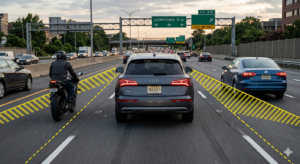 Blind spots are areas beside and slightly behind your vehicle that cannot be fully seen through mirrors. A quick shoulder check helps confirm that the lane or space beside you is clear before moving.
Road test examiners expect to clearly see you perform shoulder checks during specific driving actions. Missing even a few shoulder checks may negatively affect your road test result.
When You Must Shoulder Check
Shoulder checks are required whenever your vehicle changes position or direction in a way that may affect nearby traffic, cyclists, or pedestrians.
You should perform a shoulder check when:
- changing lanes
- turning right or left at intersections
- pulling over to park
- leaving the curb
- merging into traffic
- opening your vehicle door after parking
- moving around parked vehicles
- re-entering traffic after stopping
Many students lose marks because they forget shoulder checks during simple actions such as pulling away from the curb or preparing for a right turn.
You can also review our complete guide to passing the ICBC road test in Victoria to understand how shoulder checks fit into the overall road test process.
Why Shoulder Checks Are Important for Safe Driving
Shoulder checks are not only required for passing a road test. They are essential for preventing collisions with vehicles, cyclists, pedestrians, and motorcycles hidden in your blind spot.
Without a shoulder check, you may miss:
- a cyclist beside your vehicle
- a vehicle entering your lane
- a pedestrian stepping off the curb
- a motorcycle travelling in your blind spot
Developing this habit improves your awareness and helps make your driving safer long after passing your road test.
How to Shoulder Check Correctly
Performing a proper shoulder check takes only a second but must be done in the correct order.
- Check your mirrors first.
- Signal early to communicate your intention.
- Quickly turn your head over your shoulder toward the blind spot.
- Return your eyes forward before moving.
- Proceed smoothly once you confirm the space is clear.
During your road test, the examiner must clearly see your head movement. A small eye movement is usually not enough to demonstrate a proper shoulder check.
Practicing regularly helps shoulder checks become automatic rather than something you must consciously remember.
Common Shoulder Check Mistakes
Many drivers understand shoulder checks but perform them incorrectly or inconsistently.
Common mistakes include:
- only checking mirrors
- shoulder checking too late
- forgetting to shoulder check before turning
- moving the vehicle before checking
- failing to check both directions when necessary
- performing shoulder checks too quickly to be noticeable
One missed shoulder check may not automatically fail your test, but repeated observation errors can result in a poor score.
You may also want to review our common ICBC road test mistakes guide to learn what examiners frequently mark.
Practicing Shoulder Checks in Victoria
Practicing shoulder checks in real traffic situations helps build consistency and confidence.
Students in Victoria often benefit from practicing in areas with:
- bike lanes
- residential streets
- lane merges
- busy intersections
- school zones
Driving lessons with an instructor can help you identify moments where shoulder checks are commonly missed.
Our instructors at Ez2Drive Academy in Victoria provide real-world practice that helps students develop strong observation habits.
Instructor Tip
Make your shoulder check obvious but natural. Turn your head clearly enough that the examiner can see the movement without exaggerating it.
Think of shoulder checks as a routine safety habit rather than a road test requirement. When practiced regularly, they become automatic and improve your overall driving awareness.
Frequently Asked Questions About Shoulder Checks
Do I need to shoulder check before every turn?
In most cases, yes. Shoulder checks are especially important when turning right or left, changing lanes, merging, or moving away from the curb.
Will I fail my ICBC road test for missing a shoulder check?
Missing a single shoulder check may not automatically fail your test, but repeated observation errors can significantly reduce your score.
Can mirrors replace shoulder checks?
No! Mirrors do not fully show blind spots. A shoulder check confirms that the space beside your vehicle is clear.
If my car has blind spot assist, do I still need to do a Sholder check?
Yes! you must still perform a shoulder check. While Blind Spot Assist is a highly effective safety feature designed to alert you to vehicles in your periphery, it is not infallible. You should continue to manually check your blind spots for the following reasons:
- Sensor Limitations: Sensors can be obstructed by dirt, mud, heavy rain, or snow, which may lead to delayed warnings or system failure.
- Speed Discrepancies: If another vehicle is approaching at a very high rate of speed, the system may not detect them quickly enough to provide a timely alert.
- Object Detection: Some systems struggle to detect smaller objects, such as motorcycles, bicycles, or pedestrians, as reliably as they do full-sized cars.
- System Malfunction: Like any electronic component, the system can experience technical glitches or fuse issues without immediate warning to the driver.
Key Rule: Technology is an extra set of eyes, but the driver is the final authority on safety. Always verify the path is clear with a quick glance over your shoulder.
How can I remember to shoulder check more consistently?
Practice repeating the same sequence every time: mirror, signal, shoulder check, move. Repetition helps turn shoulder checks into a natural habit.